Friday, October 23, 2015

ACE's in Arizona

This story was on the front page of the Arizona Republic yesterday:  Child Adversity, Abuse in Arizona Costs $23 Billion.  In a nutshell, researchers took data from a study that looked at ACE's (adverse childhood experiences) of Arizona's youth and examined the economic impact of those experiences.  Because children in Arizona are above the national average in the average number of ACE's (not a category you want to excel in), the economic ramifications are significant--to the tune of billions of dollars.

Consider this pyramid and how a foundation of ACE's leads to social, emotional, and cognitive difficulties, along with risky behaviors that compromise health and wellness.


Source: jimfazioib.com
 

What is an adverse childhood experience (ACE)?  It is trauma that occurs to an individual before the age of 18.  Here is a list:
  • recurrent physical abuse
  • recurrent emotional abuse
  • sexual abuse
  • alcohol or drug abuse in the household
  • incarcerated household member
  • someone in the house who is depressed, mentally ill, institutionalized, or suicidal
  • mom who was treated violently
  • one or no parent
  • emotional or physical neglect
In Arizona, 44 percent of kids between the ages of 12 to 17 have experienced 2 or more ACE's.  The national average is around 30 percent.  Between 2009-2013, victims of child maltreatment in Arizona rose by 246 percent.

I found it interesting that the qualification "mom who was treated violently" made the list of ACE's.  A few years ago, a pre-teen girl shared some past stories about her mother. I saw a pattern of attraction towards aggressive men and asked the girl, "Why do you think your mom found herself drawn to those types of men?"  The girl immediately became defensive of her mother's choices. In retrospect, perhaps I could have phrased the question differently.  From what I knew of her family at the time, her mother was married to a man who appeared to treat them well and had a steady job.

If you want to read further about the ACE study in Arizona, here are some links to pursue:
Arizona is planning to focus on early childhood interventions (think preschool and home visits during the early years), as well as training and education for young parents.  Personally, I think those are needed focuses but would love to see more Christian organizations and churches that feel called to provide those services at no cost to the disadvantaged.

One final resource to consider with regards to this topic:  Dr. Karyn Purvis, of Texas Christian University.  I was introduced to her work some time ago.  Dr. Purvis is a compassionate, articulate developmental psychologist whose main mission has been helping families who have adopted or fostered children.  She often uses the term "children from hard places," and I think many of the children and youth that Aim Right serves come from similar home experiences, even if they are not in the foster care system.

She emphasizes that it's also important to examine a child's pre-birth trauma, since events that occur while the child is in the womb are also traumatic to the developing child.  This video examines a child's brain development and also gives hope for the at-risk child.  God has marvelously made the brain similar to plastic in that early bad experiences influence it, but so do later, positive, repeated experiences.  That is encouraging as we work with at-risk youth!   


Thursday, October 15, 2015

Relating to the Culturally Diverse

I read an academic article recently that examined the management strategies of two teachers who were successfully engaging students in a culturally diverse, urban school. The strategies they used are highly applicable to urban youth ministry, too.

1) Understand equality vs. equity. Equality is "the same." The same rules, the same punishments. The same reward, the same amount of time. In other words, will you do the same, all the time, for everyone?  Did Jesus treat everyone the same, all the time?  Equity is more concerned with justice. Youth (and leaders alike) will likely struggle with the concept of equity until #3 and #5 below are happening.

2) Understand power structures. Know who controls your youth culture. Which kids are the leaders?  Which ones are the followers?  Are the leaders following your example and listening to your words--or are they against you?  I recall having a camper in my group one year at Teen Camp that I might describe as a "counselor's dream."  She was a leader, punctual, and a morning person.  While I was away at our early morning staff meeting, she was making sure the lights were on and that the campers in our group were getting out of bed so that they could make it to breakfast on time.  What a gift it was to me as a counselor to have a teen leader like that in my group!

3) Immerse yourself in their world. What music do they like? What do they do for fun? Get to know as much about them as you can. Go to their soccer or basketball games and their school performances. If you are invited to a family party, try to go.

4) Understand yourself in relation to others. This especially applies to someone who comes from a white, rural, non-diverse culture, which describes the majority of our interns. Your life experiences, upbringing, traditions, and values will be vastly different from inner-city, at-risk youth. There will be ways to connect despite those differences, but know that there are significant differences.

5) Grant entry into your world. Be authentic and real, and share stories about your life. The children and teens I have invited to come to my home do not soon forget those experiences.

6) Have a family mentality. Respect and care for youth as if they were your family. In fact, some of them will likely view you as family, whether that is as a mother or father figure, an older sister or brother, or an aunt or uncle. I think of Paul's relationship with Timothy; he viewed Timothy as his son in the faith.

Wednesday, October 14, 2015

Teen Night 10.09.15

Ro planned a fun evening of games for Teen Night on Friday. There was a tiny basketball goal with plenty of plastic balls for a speed shooting contest.
 
 
Next, contestants tried to blow cups off a table using straws.

 
Finally, a few brave teens played the "Drink Game" (not to be confused with the drinking game). Ro & Lourdes had put a variety of different beverages in numbered cups. Teens chose two numbers and then combined the drinks into one cup, trying to guess what they were actually drinking. I can't recall the weirdest combination, but the one containing pickle juice received a funny reaction!


Tuesday, October 6, 2015

Youth Haven Visit

A team of six workers from Youth Haven Ranch visited Kids Club last Wednesday and presented a program for us.  These girls were excited!
 
 
Youth Haven opened with a song....

 
then a skit about Jonah.

 
Can you spot Jonah?  (His hair is a bit of a mess)


Children were divided into 3 groups for an object lesson
and learning about forgiveness and the gospel.


The evening ended with a game outside. A big, big thanks to Youth Haven for making the hour-ish drive to Phoenix to share with our children. They do not normally do "site visits" so this was definitely God's provision of the extra staff we needed to be able to have a Kids Club in September. 
 
Note:  I discovered that Youth Haven has some Flickr photo albums.  You can spot some of "our" kids in both of these albums:
 
- - - - - - - - - - - - - - - - -
 
We get some interesting donations at Aim Right, but I cannot recall ever receiving a dozen, still-in-the-box flat screen televisions before now.  I am not sure what the plan is for all of them, but if you or someone you know is in the market for a television, give us a ring before you buy one somewhere else.  We may be selling some of these!
 

Tuesday, September 29, 2015

This 'n' That

Thanks to all who made the Ohio Golf Outing a success on Saturday!  You can find some photos of the day here.  Just under $12,000 was raised to benefit Aim Right.
 Staff from Youth Haven Ranch in Picacho, Arizona, are traveling to Phoenix tomorrow to put on a Kids Club program for us.  Excitement is high!  We are grateful for their willingness to come and share with our kids.

 
Artful Expressions is a fall event Aim Right is hosting on November 6-7.  Music + spoken word + comedy + coffee & dessert = a great time, for a great cause.  RSVP soon to reserve the evening of your choice (clicking on the flyer will enlarge it for readability).
 
 
We're grateful for Cakes for Causes partnering with us in this event.  Baking for non-profit causes is their passion, and they are on deck to provide a lot of yummy items for the dessert buffet.
 
I did not get a photo of last night's packed-out teen Bible study, but 35+ teens were in attendance (possibly a record for a Monday evening!).  There were at least two van loads of teens picked up, plus a number who came via their skateboards.  Ro (pictured below) did a great job of sharing about the parable of the talents and his personal journey with Christ. 
 
Since this is a highly transitional area, with families moving quite often, it is not unusual to lose touch with kids or teens that may have been involved in Aim Right programs at one time.  That happened with two brothers several years ago, when they moved away from the Projects, and we did not know where they had relocated.  Guess who came to Bible study yesterday evening?  One of those boys, who is now 15.  His name was fresh on my mind since I had just been going through our Youth Haven files yesterday and found the brothers as campers who went there in 2009.
 

Friday, September 18, 2015

Issues in the News

From time to time, I come across issues in the news that I think are significant, especially as they relate to at-risk children and teens.  Being knowledgeable about these issues can give insight into how to compassionately care for and guide struggling youth, along with building awareness of what temptations they most likely face.


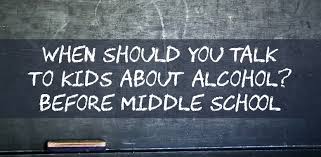
When to Talk to Kids About Alcohol - It might be sooner than you think.  Within an urban context, I would bump the age even lower.  In an urban setting, kids are exposed to much more at younger ages.


How Poverty Affects Brain Development - The University of Wisconsin has completed a study on how extreme poverty affects children's brain development.  The article bears this out, but it is really the social factors typically associated with extreme poverty in America that contribute to this:  a high-stress, unstable home environment; violence; poor nutrition; and limited experiences and stimulation. 

Marijuana.  It's already legal in Arizona for medical purposes.  There is a strong push to legalize it recreationally as well.  Here are some articles that I believe are worth reading.

The Legalization of Marijuana:  What Christians Should Know (by a former LA police lieutenant)

Marijuana, Teenagers, and Youth Ministry (by Greg Stier of Dare 2 Share)

Study: Daily Marijuana Use Among College Students at Highest Rate in 35 Years (what is happening now that young people view marijuana as "safe")

Monday, September 14, 2015

Aim Right North Community Night

Aim Right North resumed its Community Night event on Friday.  The large inflatable slide was a big hit, along with hot dogs and other games and activities.  You can find more photos of the evening on our Facebook page.